World That Works
Redesign the world’s systems to support the success of all people and all life on Earth.
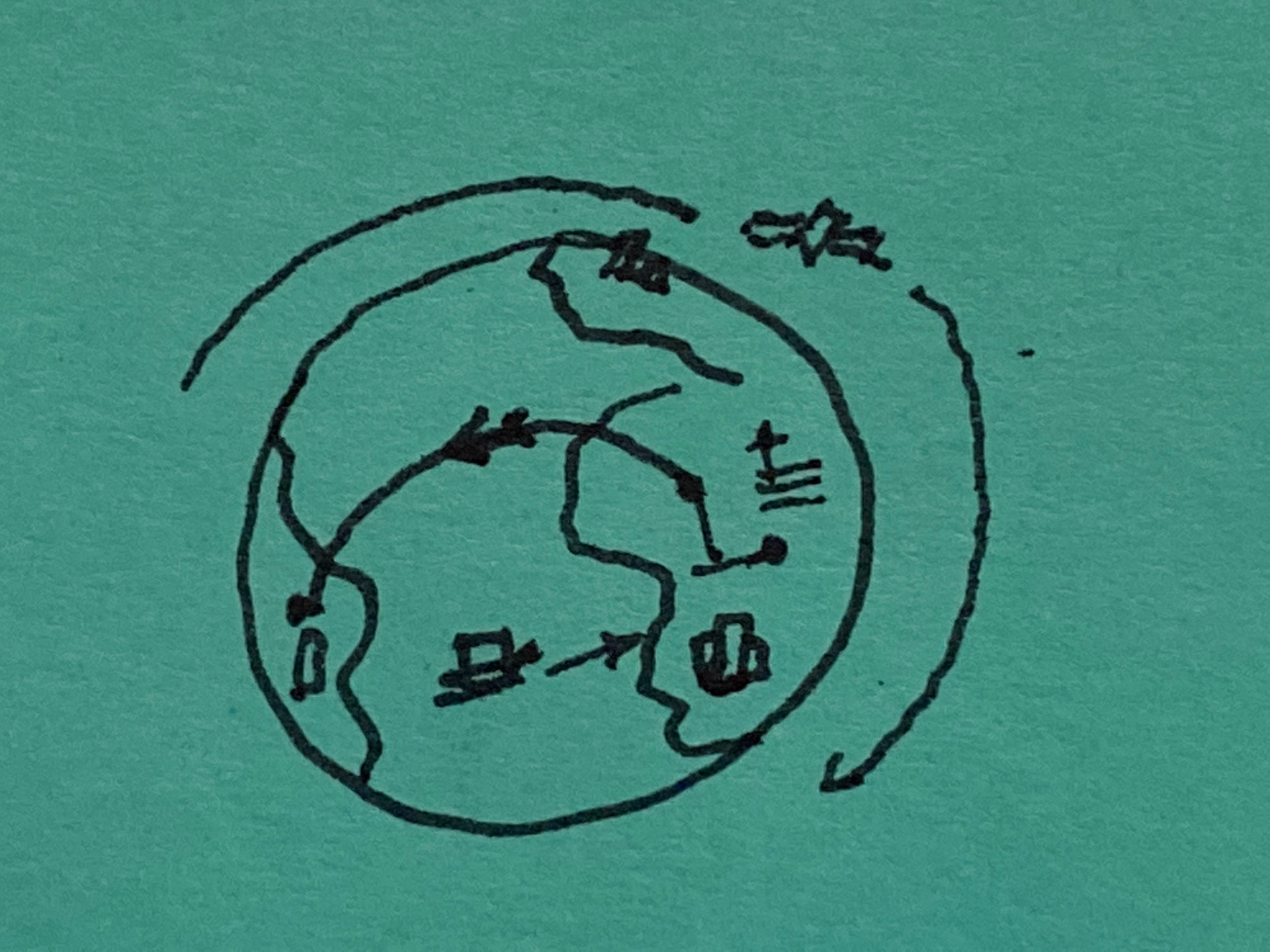
for a Global Civilization to emerge, we are going to need all our world systems, like our information systems and life support systems, working optimally for the benefit of everyone; they are what will enable our evolution.
Throughout human existence, the scarcity of food and resources has shaped the design of our world systems. Rather than supporting all life, the systems are designed to decide who gets a share of the limited resources and who doesn’t. If we hope to create a true human family, we’ll need to transform our world into a world that works for all humanity.
Our world was designed and built by humans over thousands of generations. As a human-created system, it’s within our ability to change and improve it. Our world has always been intended to protect us and help us thrive on a sometimes hostile planet, but we’ve reached a point where we need to stop fighting against the planet and learn to live with it.
Living system versus mechanistic models
“The models we use shape the way we see the world and our reality. Using mechanistic models for problems has led the world to mechanistic solutions—solutions that fail when one of the cogs in the machine fails, that are seen as “independent” of their environment, and that regularly create as many new problems as old ones they solve. Viewing the world as a living system fosters a respect for a problem’s complexity, an awareness of the context or environment in which it is embedded, and the possible solutions that can result in strengthening the health of the system and the elimination of the problem.” — Medard Gabel, Design Science Primer
“Viewing our technology as a collection of independent machines, each composed of myriad parts, none of which are related, all of which somehow add up to a life-support system for humanity is, in the end, a debilitating and lifeless view of technology and our role in creating technology. Seeing our technological systems as living systems, [as] interrelated and interdependent as the various systems and components of our own bodies and their environment, even going as far as to see technology as biology, leads to a whole new perspective on everything from the historical developments (embryology) of technology, possible options that mimic nature and living systems (biomimicry), to current and future trends (teleology), and even for the philosophically minded, humanity’s role in the universe (cosmology). Seeing our collective life-support systems as an external metabolic system, analogous to, but more differentiated than, our individual life support system we refer to as our internal metabolic system, helps us realize the interrelatedness of all our technology, it’s multiple functions in society, and its vital role in maintaining our viability as a species. Most importantly, given the present state of our ignorance about our environmental interactions, it helps us to see the vital connections between our living systems and our environment. Viewing our technology as an external metabolic system, the healthy functioning of which is essential for humanity’s health and well being, makes the notion of ‘zero emissions’ not just a utopian fantasy or environmental platitude, but as important as stopping the internal bleeding of a wound to an individual human being.” — Medard Gabel, Design Science Primer
Local problems are global problems
“The whole world is now the only relevant unit of problem solving. Globalization has, whether we like it or not, made us all one. We have always been voyaging on one ship, the SS Earth, but globalization has transformed this philosophy into an economic, technological, political and ecological reality that is unavoidable, no matter how high the walls on our gated community or how far removed from the centers of civilization we choose, or are forced, to live.” — Medard Gabel, Design Science Primer, p.15
Civilization is at stake
In the past, when a civilization collapsed, it affected a relatively small part of the planet and its inhabitants. Ours is the first truly global civilization, so a collapse would likely be global and catastrophic.
Therefore:
Continue the careful development of our world systems toward making them antifragile, regenerative and supportive of all humans. Treat them as living systems; all systems have a degree of life to them, and the goal is to increase the life of our human-made systems until they become integrated into Earth’s natural systems, providing robust and abundant life support for all humanity without damaging other life on the planet or the planet itself.
Our living world depends completely on a healthy planet—Flourishing Earth—and the people who operate it